What Is Climate-Controlled Storage and When Does It Make Sense?
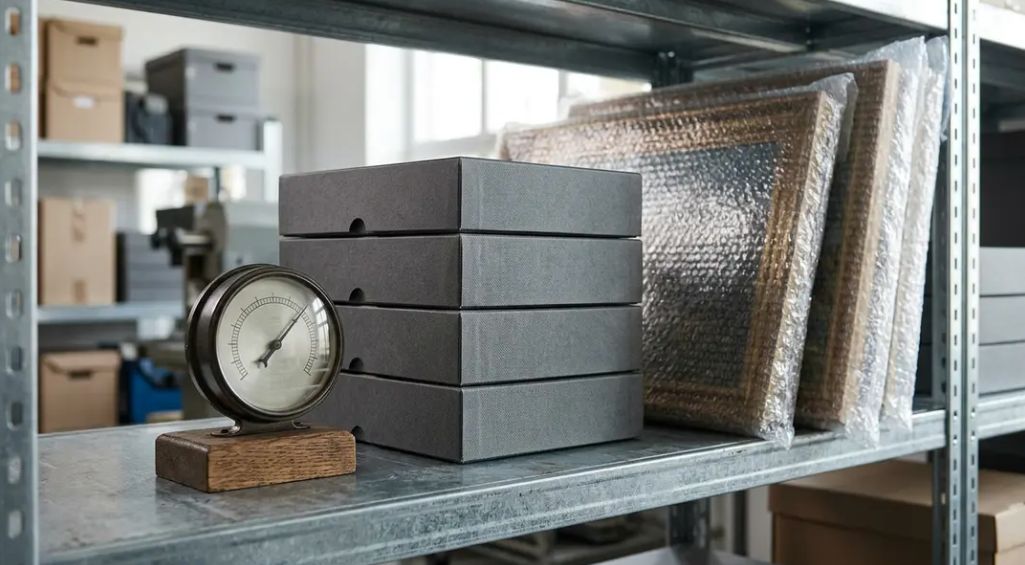
A hardwood dresser left in a standard garage through a Southern summer can come back warped along the drawer faces. A box of old photographs stored in an Arkansas attic over winter may arrive at the next address brittle and stuck together. This is what can happen when temperature-sensitive belongings ride the full swing of the regional seasons without any buffer. That is exactly the problem climate-controlled storage is built to solve.
Why the Local Climate Makes This Worth Considering
Across the areas Superior Storage serves, from northwest Arkansas and the Georgia coast to the Piedmont of North Carolina and the lake country of Wisconsin, the seasonal temperature range is wide. Arkansas summers push well past 95° F, and Wisconsin winters regularly drop below zero. Georgia’s coastal air brings its own punishing heat cycle from June through September. Standard garages, sheds, and attics absorb all of it. Interior temperatures in an unregulated space can climb far above the outdoor air temperature in the summer and drop just as sharply in the winter.
A climate-controlled unit holds a consistent temperature range year-round, regardless of what is happening outside, giving everything you store a much more stable environment.
What Suffers Most Without Temperature Regulation
Wood is one of the first casualties of repeated temperature swings. Furniture joints loosen, drawer faces cup, and finishes crack when wood expands and contracts through enough cycles. Solid wood pieces and old furniture are especially vulnerable because older construction methods leave less room for movement.
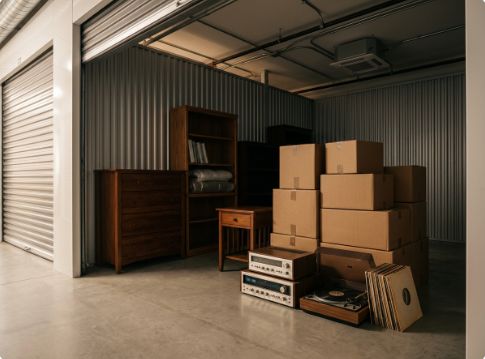
Paper and photographs degrade faster than most people expect. Printed photos can stick together, curl, or develop surface discoloration after a single hot season in an unregulated space. Documents stored long-term in fluctuating conditions become brittle. If you are holding onto aged family furniture or printed artwork, a temperature-controlled unit is worth the modest cost difference.
Electronics are another category that takes quiet damage from temperature extremes. Circuit boards, screens, and battery components are all sensitive to heat buildup. A television or laptop stored through a Georgia summer in a metal-sided unit can come out with degraded components even if it looks untouched. Vinyl records warp. Instrument necks shift. For a deeper look at one specific category, our article on climate-controlled storage for clothes goes over what happens to fabric over time in unregulated conditions.
Long-Term Storage Versus Short-Term: Does the Timeline Change the Answer?
For a two-week move between homes, a standard unit is usually fine for most items. The risk builds with time. Anything stored across multiple seasons is going to experience the complete local climate cycle at least once. That is when the case for climate control becomes the obvious answer. Learn more about how long-term storage and climate control go hand-in-hand to give your belongings a stable place to stay.
Finding the Right Unit
Climate-controlled units come in the same range of sizes as standard units, so the decision is about the environment, not the footprint. If you are unsure what size fits your load, our unit size guide is a practical starting point before you reserve. Superior Storage offers climate-controlled options across multiple states, and you can browse all available storage locations to find a facility near you. For those in Georgia specifically, our climate-controlled storage facility in Canton, GA, is a great option.
The decision usually comes down to what you are storing and how long it will sit. Wood furniture, printed photos, electronics, vinyl, and fabric all benefit from a stable environment across the full annual cycle. If your belongings fall into any of those categories and you are planning to store through at least one full season, climate control is the right choice.