How To Pack a Storage Unit the Right Way

You rent a unit, load everything in, and close the door, only to realize three months later that the one box you need is buried behind a wall of furniture. Knowing how to pack a storage unit before you start loading makes the difference between a unit you can actually use and one you dread opening. A little planning upfront saves a lot of frustration later.
Start With a Clear-Out, Not a Load-In
Before a single box goes into the unit, sort through what you actually intend to store. Packing a storage unit with items you no longer need just means paying to store clutter. Set aside anything you plan to donate, sell, or discard. What remains should be things you genuinely want to keep but don’t have room for at home right now. If you’re in the middle of downsizing, our downsizing tips on our blog can help you work through that decision.
Choose the Right Unit Size Before You Pack
Packing strategy depends heavily on how much space you’re working with. A 5×10 unit calls for a very different approach than a 10×20. Check our storage unit size guide before you commit to a unit; it’s easier to adjust your rental than to repack everything after the fact.
Pack Boxes Consistently and Label Every One
Use uniform box sizes wherever possible. Consistent dimensions stack cleanly and reduce wasted vertical space. Odd-shaped or oversized boxes tend to shift, which destabilizes everything above them. Fill each box fully so the top doesn’t cave in under weight, but keep heavier items in smaller boxes so they stay liftable.
Label every box on at least two sides, not just the top. When boxes are stacked, the top label disappears. Writing the contents and the room it came from on the side means you can scan a row of boxes without moving anything. Color-coded tape by category or room speeds this up even further.
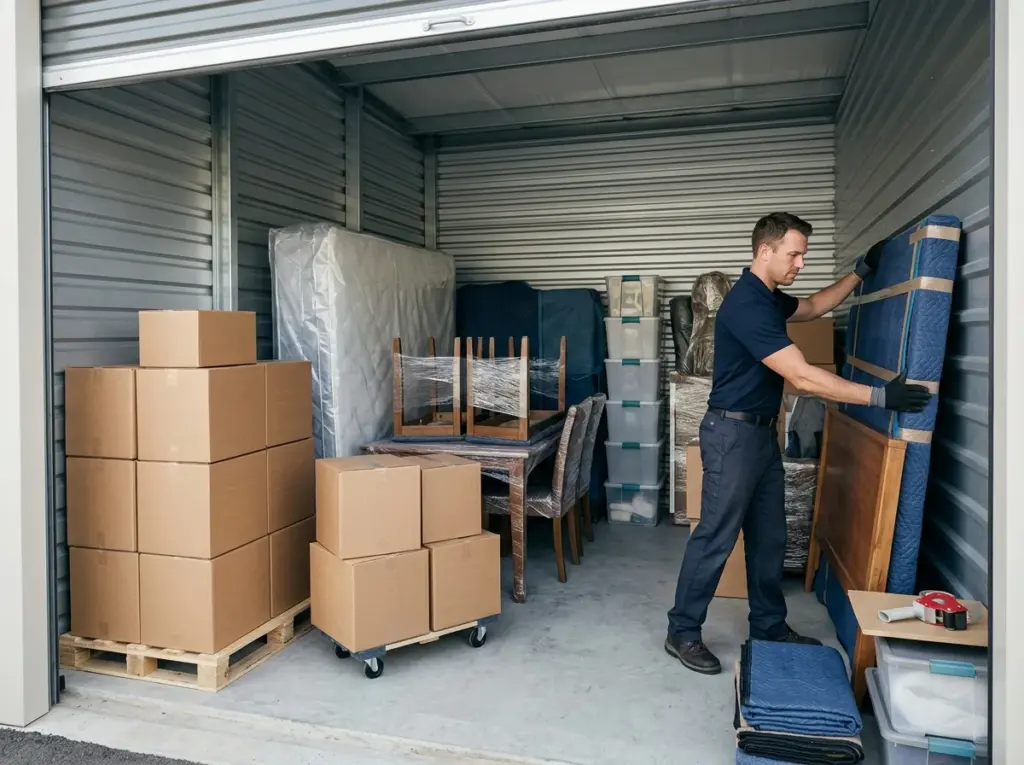
Build the Unit Like a Room, Not a Pile
Place the heaviest, largest items against the back wall first: dressers, bed frames, appliances, and large furniture pieces. Disassemble what you can (table legs removed and taped to the tabletop, bed frames broken down flat) to reclaim floor space. Stack boxes in front of the large items, heaviest at the bottom and lighter boxes toward the top.
Leave a clear path down the center of the unit from the door to the back. It sounds like wasted space, but that aisle is what lets you reach anything without unpacking half the unit first. Items you expect to access regularly should stay near the front, within arm’s reach of the door.
Protect Temperature-Sensitive Items
Wood furniture, electronics, and musical instruments can warp or crack when stored in a unit that swings between extreme heat and cold. If your inventory includes any of those, a climate-controlled storage unit keeps the environment within a consistent temperature range year round. It’s worth factoring in during the planning stage, not after something comes out damaged.
Keep a Simple Inventory List
A handwritten or digital list of what’s in the unit takes about ten minutes to put together and saves hours of searching later. Note which boxes hold seasonal gear, which hold furniture hardware, and where any documents are filed. Pair this with our packing tips for a more complete pre-move checklist.
Good packing habits turn a storage unit into a genuinely useful extension of your home rather than a holding area you avoid. If you’re ready to find a unit that fits your plan, browse Superior Storage locations to see what’s available near you.